
The die casting sector is currently at a critical turning point. The exponential rise in global energy costs and increasing regulatory pressure for sustainability have transformed efficiency from a mere advantage into a strategic imperative. Companies can no longer afford to operate energy-intensive, outdated machinery.
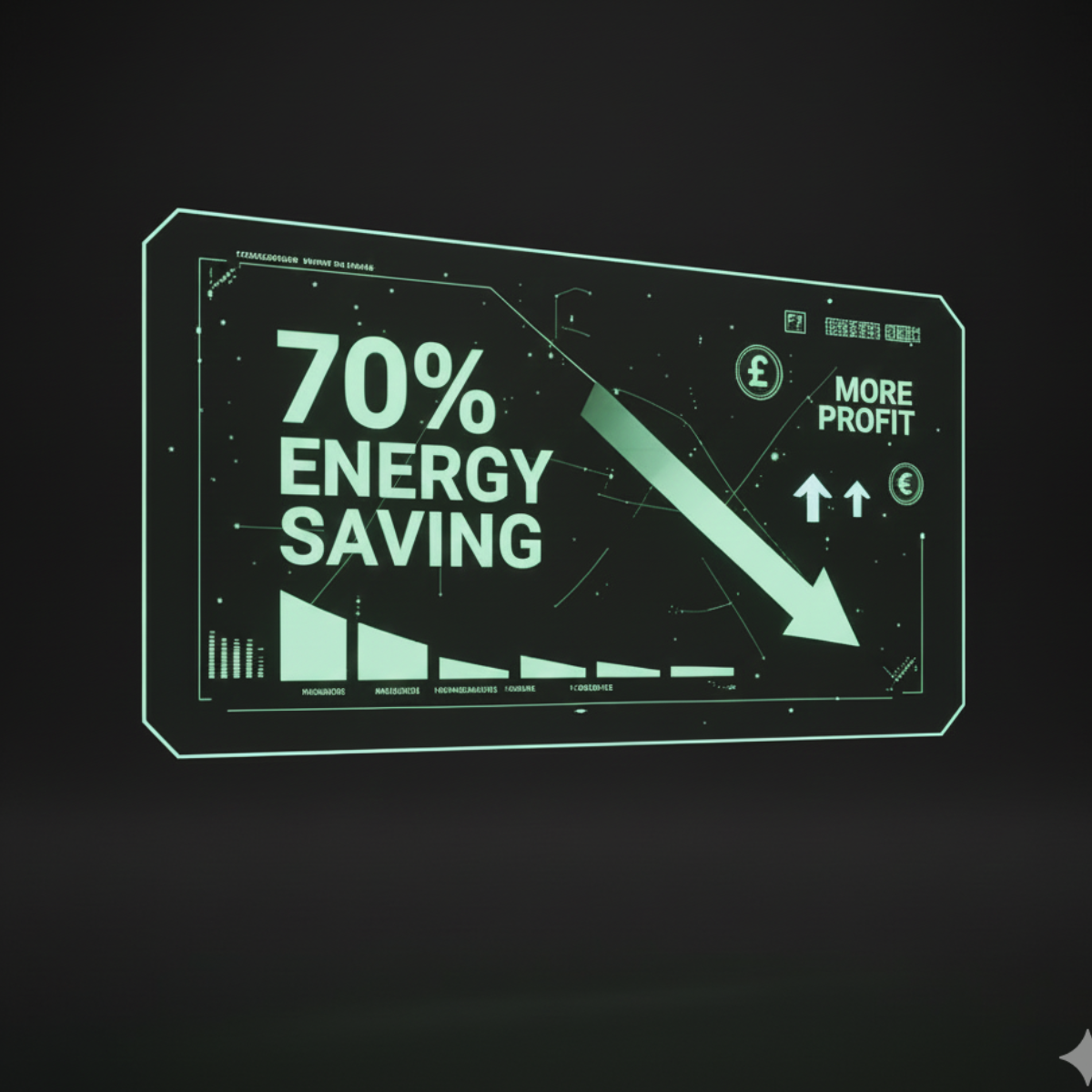
In this environment, the promise from Agrati AEE—an energy saving of up to 70% on their die casting systems—is not just a marketing claim but a definitive answer to the challenges facing modern manufacturing. But how is such a dramatic result achieved, and what is its true impact on a company’s bottom line?
As industry professionals, it is vital to shift focus from the machine’s initial purchase price to its Total Cost of Ownership (TCO), a metric that defines the true, long-term profitability of the investment.
For decades, the purchasing decision for a die casting machine was primarily driven by the list price and basic specifications. Today, the only sensible metric is TCO.
In the context of die casting, TCO does not just account for the initial capital outlay but integrates all operational and maintenance costs over the entire service life of the machinery. The factors that have the greatest impact are:
It is precisely on the first point that Agrati AEE’s technological innovation is redefining industry standards. Reducing energy consumption by 70% means cutting the most volatile and hardest-to-control expenditure, transforming it into a stable and predictable competitive advantage. The difference between an investment that pays for itself quickly and one that erodes margins lies precisely in integrated energy efficiency.
The remarkable level of efficiency achieved by Agrati AEE machines (such as the CM and CT series) is not the result of a single modification but a holistic redesign of the operating systems.
The heart of this revolution is the adoption of an intelligent servo-hydraulic architecture. Unlike traditional hydraulic systems, where the pump constantly operates at maximum power, the Agrati AEE system uses servo-pumps controlled by inverters. This allows the motor to deliver power and oil flow only and exclusively when the process demands it.
During phases such as cooling or waiting times (which account for a significant part of the die casting cycle), the pump motor can slow down or even stop entirely. This selective shutdown eliminates the thermal energy dissipation and friction typical of conventional systems, guaranteeing massive savings.
Another crucial element is the efficiency of the injection process, which is essential for both component quality and mould integrity. Agrati AEE’s advanced injection design is specifically engineered to optimise the filling and intensification phase.
A more precise and high-performance injection means:
Sustainability is no longer a cost but a business lever. The 70% reduction in energy consumption has a direct and measurable impact on the carbon footprint (Scope 2) of every single component produced.
In an era where public tenders, large contractors (particularly in the automotive and aerospace sectors), and even end consumers demand traceability and environmental certification, a low-impact die casting process becomes an enabling factor for accessing premium markets.
Companies adopting Agrati AEE’s high-efficiency solutions not only increase their operating profit through cost savings but also improve their environmental rating and reputation, positioning themselves as leaders in sustainable manufacturing.
The Automotive sector, currently undergoing a full transition to electric vehicles (E-mobility), demands extremely complex, structural components made from light alloys. These parts, often made from Aluminium or Magnesium alloys, require robust and precise Cold Chamber machinery.
In this field, efficiency is measured not only in kilowatts but also in reliability and process stability. Agrati AEE systems are designed to maintain extremely stable operating parameters even under high load, ensuring the perfect microstructure required by complex alloys for critical components (such as battery housings). This combination of precision and energy saving is crucial: it allows light alloy producers to maximise material yield without compromising margins due to high operating costs.
Innovation in die casting, as demonstrated by Agrati AEE’s high-efficiency technology, is not a luxury but the foundation for long-term profitability.
For manufacturing decision-makers, the choice is clear: continue grappling with the fluctuating operational costs of traditional machinery, or invest in a solution that guarantees a quantifiable 70% energy saving, a drastically reduced TCO, and a lasting competitive edge in terms of sustainability and performance. The future of die casting is undoubtedly high-efficiency.
Would you like to deepen the TCO analysis for your specific production line or compare the performance of the CM and CT series? Contact Agrati AEE specialists directly.