
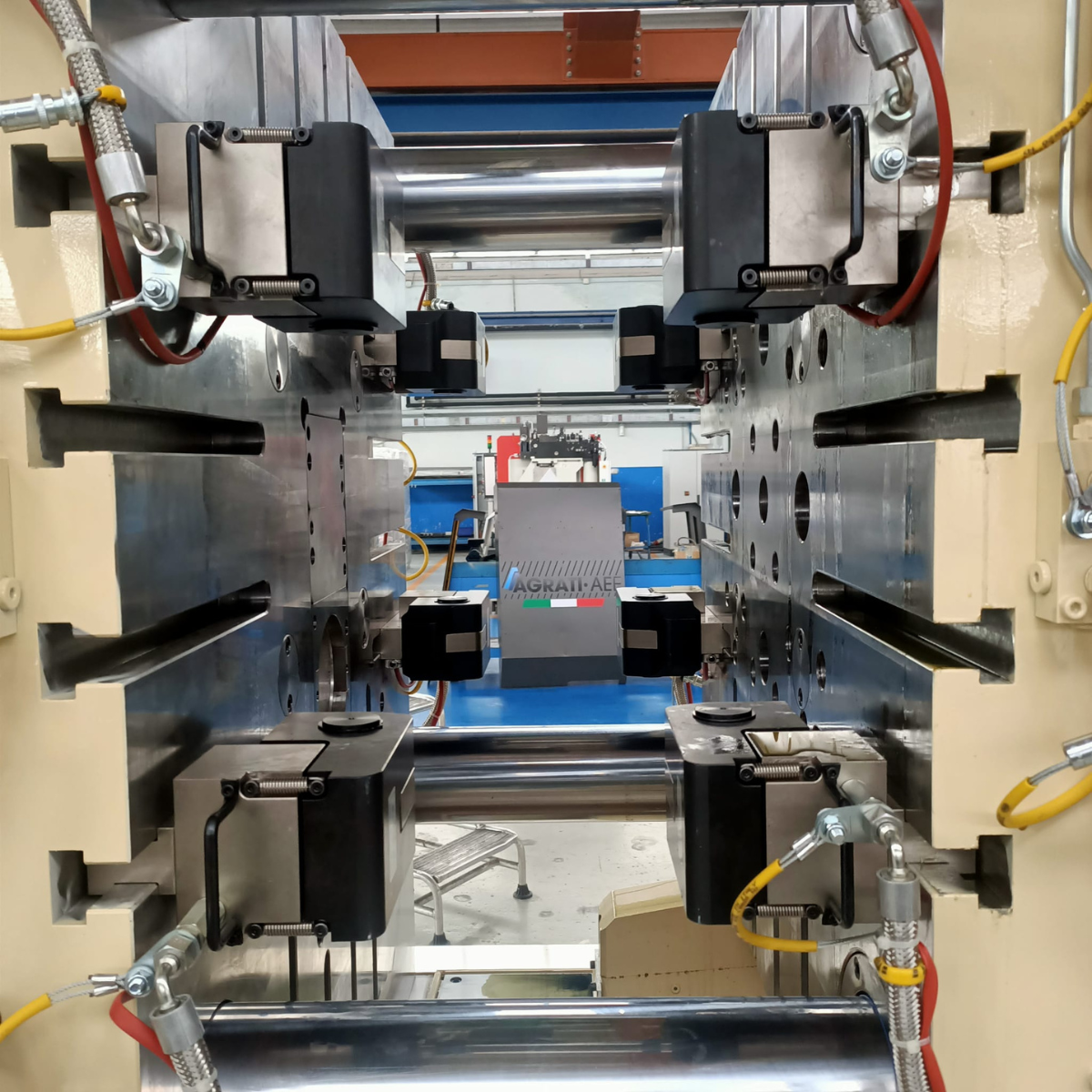
Industry 5.0 represents an evolution from the previous industrial revolution, focusing on the integration of advanced automation and human contribution. Whereas Industry 4.0 was characterized by the push for automation and interconnection of systems, Industry 5.0 puts human value at the center, focusing on collaboration and sustainability. This shift is crucial to creating production processes that are not only efficient, but also ethical and environmentally friendly.
At the heart of this revolution is human-machine interaction. Thanks to technologies such as artificial intelligence, collaborative robots and intuitive interfaces, machines no longer simply perform automated tasks, but work alongside operators, expanding their capabilities and enabling more accurate and flexible control of production processes.
Today’s industries face complex challenges, such as the need to reduce environmental impact without compromising competitiveness. Sustainability is a central issue: companies must adopt production practices that consume less energy and resources, reducing CO2 emissions. In this context, die casting machines play a crucial role, thanks to their ability to process lightweight and recyclable materials, such as aluminum and magnesium.
Another major challenge is the growing demand for customization. Customers expect products increasingly tailored to their specific needs. This requires flexibility in production processes without sacrificing efficiency. Industry 5.0 addresses these needs by integrating intelligent systems that enable customized production while maintaining high quality standards.
Die casting machines are a perfect example of how Industry 5.0 can transform manufacturing processes. With the integration of advanced controls and smart technologies, these machines become highly versatile and high-performance tools.
Optimizing energy consumption is one of the main benefits. With intelligent control systems, machines can adjust their operation according to actual needs, reducing energy waste. This not only decreases operating costs, but also helps make production more sustainable.
In addition, the use of advanced technologies makes it possible to improve the quality of manufactured components. Real-time controls and optimization algorithms ensure high accuracy, reducing defects and rejects. This results in greater overall efficiency and material savings.
Prominent among the key technologies for Industry 5.0 applied to die casting is multiprocessor control. This system allows several operations to be handled simultaneously, improving the speed and accuracy of processes. With intuitive interfaces, operators can easily monitor and adjust every production parameter.
Real-time monitoring systems are another crucial element. Advanced sensors and IoT platforms enable continuous data collection on machine operation, identifying any anomalies or opportunities for optimization. This proactive approach reduces downtime and ensures more effective maintenance.
Finally, artificial intelligence and machine learning algorithms play a key role. These tools analyze data collected during production, suggesting improvements and optimizing operational parameters. The result is more efficient, customized and sustainable production.
The adoption of Industry 5.0 in die casting machines brings significant benefits to both the environment and industry. From an ecological perspective, the reduction in energy consumption and waste helps to decrease the ecological footprint of manufacturing activities. This is especially important in the context of increasing attention to sustainability.
For industry, the benefits include increased safety and productivity. Intelligent technologies not only optimize processes, but also improve working conditions for operators by reducing risks associated with human error or malfunctions.
Looking ahead, Industry 5.0 promises even more innovative developments for the die casting industry. The evolution of digital technologies and sustainable solutions will continue to transform production processes, making them increasingly efficient and responsible.
A crucial aspect will be the role of training. As technological complexity increases, human skills will become even more important. Investing in the training of operators and their active involvement will be essential to take full advantage of the potential of Industry 5.0.
Industry 5.0 represents a tremendous opportunity for the die casting industry. Combining advanced automation, human contribution and sustainability, this revolution promises to redefine the way we produce and use resources. The future of industry is smarter, more sustainable, and more human, and die casting machines are a concrete example of this.